
More than a century ago, Duluth was booming.
Ships crowded the harbor. Trains moved freight through the city. Warehouses rose along the waterfront, filled with goods moving through one of the busiest ports in the nation.
Among them were the massive Marshall-Wells Hardware buildings in what is now Canal Park. Founded in Duluth in 1893, Marshall-Wells grew into one of the nation’s largest hardware companies, distributing tools, household goods, mining and railroad supplies.
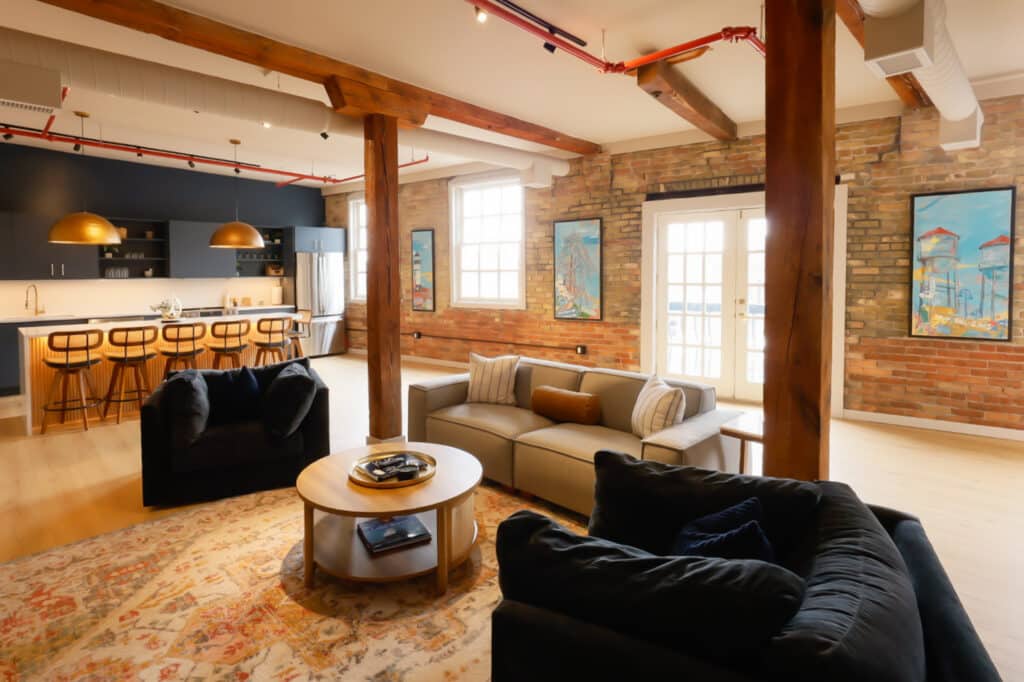
The buildings themselves were built to work. Massive Douglas fir timbers supported the structure. The walls used inexpensive brick typically reserved for the sides and backs of buildings.
“These are the cheap bricks,” Tiegen said. “But now people like this kind of cool look to the Chicago common brick.”
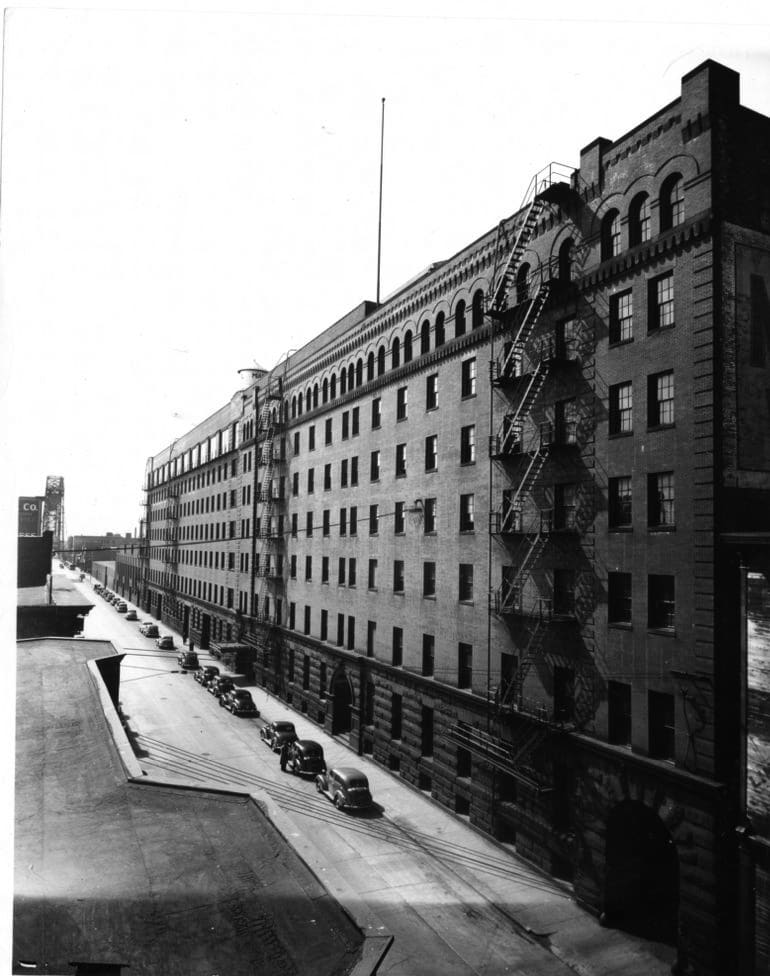

More than 130 years later, those massive fir timbers still stand.
And another generation of entrepreneurs sees possibility within those walls.
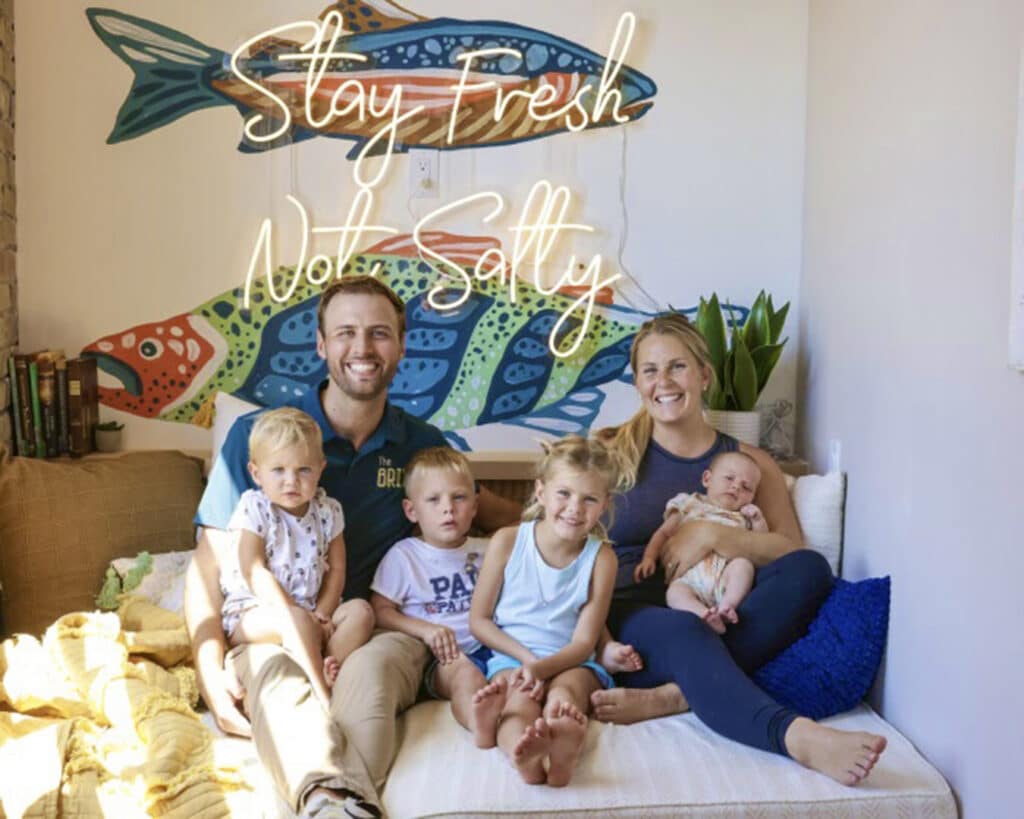
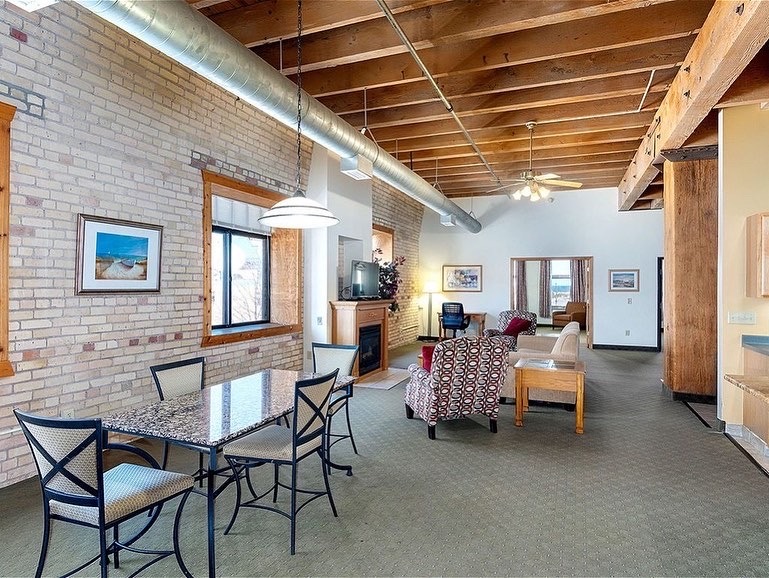
Tiegen and Keenan Brickson have spent the past four years transforming dated spaces inside these historic buildings into The Brix, a growing collection of distinctive places designed to give visitors an unforgettable Duluth experience.

They are building a business.
Building a future for their young family.
And investing in a city they believe in and love.
That makes Tiegen and Keenan Brickson ideal for Destination Duluth’s entrepreneurial series on those shaping Duluth’s Destiny.

A Hermantown Hockey Kid
Tiegen graduated from Hermantown High School in 2010, a self-described “rink rat” raised in a family where hockey, aviation and Duluth history were part of the landscape.
“I was a Hermantown hockey player, played for Bruce Plante, went to the state championship,” Tiegen said.

His father Dean piloted the private jet of legendary Duluth entrepreneur Jeno Paulucci, whose business empire once occupied a large part of Canal Park.
Even though he flew Paulucci’s private jet around the world, Tiegen remembers his father’s favorite assignment was piloting seaplanes from Duluth to Paulucci’s fly-in wilderness camp in Canada.
“He’d take Jeno’s clients up to Canada, then he’d be a fishing guide for the whole week and eat chef-prepared food and just have a great time,” Tiegen said.
He’d fly home near the end of the week, spend the weekend with his family, then turn around and do it again Monday.
“He did that for a lot of years during the summer,” Tiegen said.
Tiegen got to make the trip himself when he was 13.
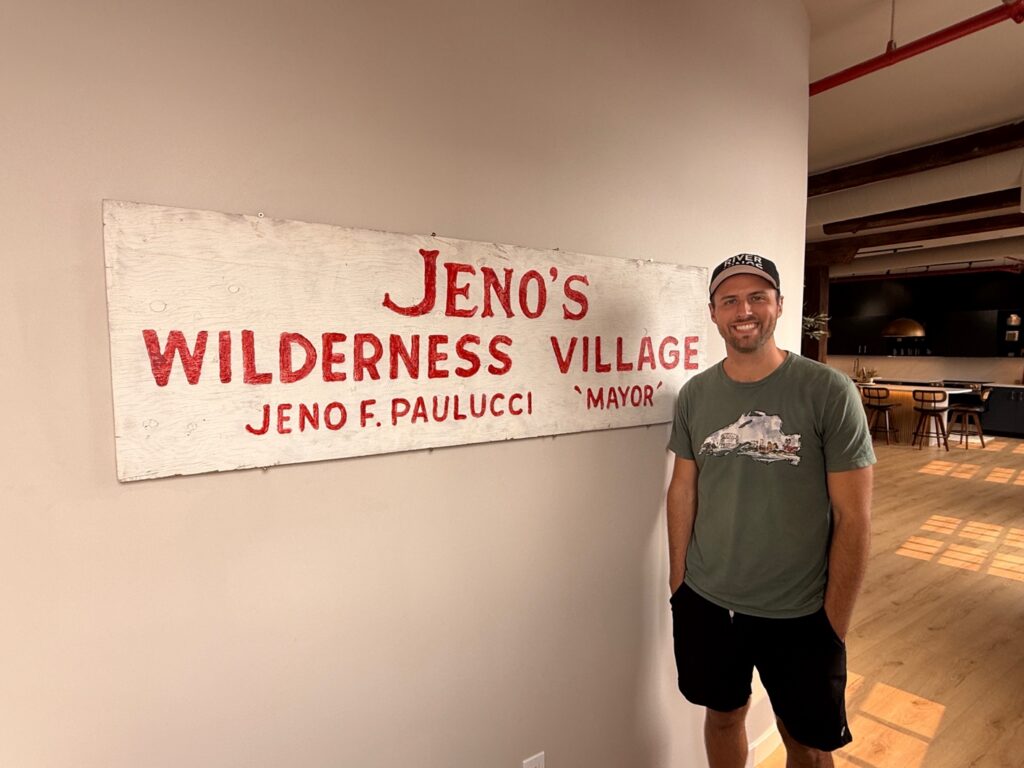
At the dock stood a hand-painted sign welcoming guests to “Jeno’s Wilderness Village.”
Fishermen posed beneath it with their catch.
Years later, the sign ended up in Tiegen’s father’s garage.
When Tiegen began building The Brix, he knew where it belonged.
“It should be in Canal Park,” Tiegen said, “near Jeno’s territory.”
Today, that original sign hangs inside The Brix Aerial Lofts, another small piece of Canal Park history finding new life within its old brick walls.
His grandfather Jack shaped him in a different way.
Jack retired in the 1980s, invested wisely and gave generously.
But Tiegen’s strongest memories are more personal.
Every spring break, the family gathered at Jack’s winter home in Florida. Summers were spent at the family cabin on the Pike Lake Chain of Lakes in Iron River, Wisconsin.
Wherever they gathered, Jack made sure everything was ready.
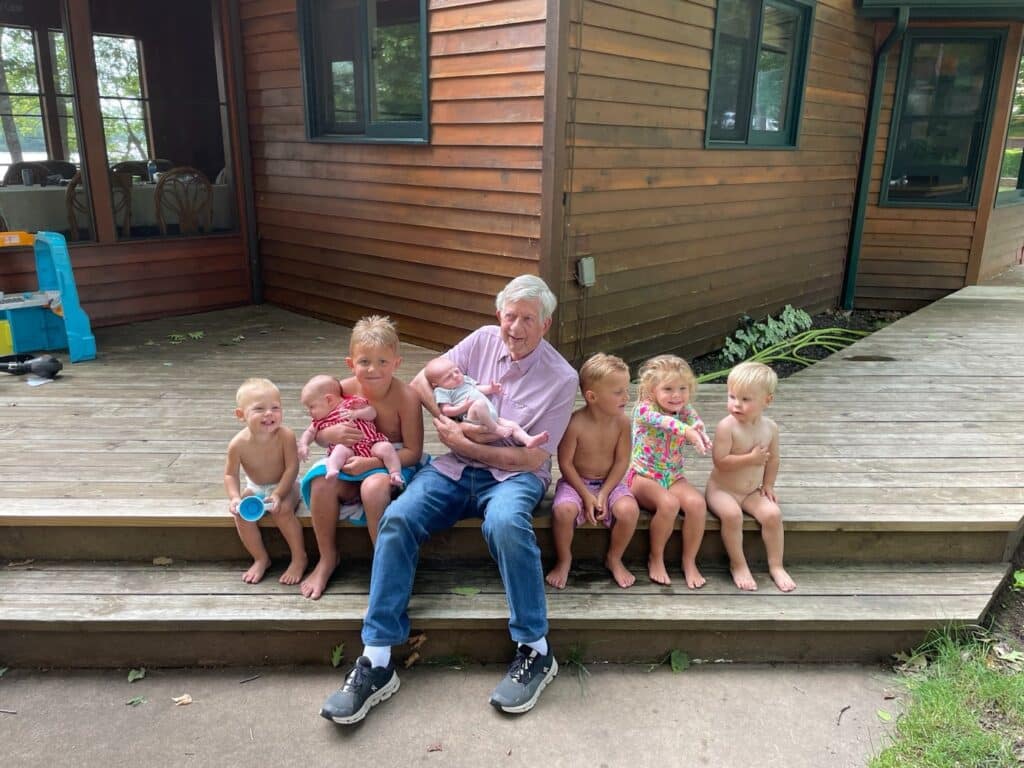
“The best memories of my life were surrounded around those two places in Florida and at the lake,” Tiegen said.
Only later did he understand what his grandfather had been creating.
“My grandpa was an expert property manager and experience provider,” Tiegen said. “I wanted to emulate that since I was a kid.”
A Girl Who Loved Duluth
Keenan grew up in the Twin Cities, but Duluth already held a special place in her heart. An avid soccer player, she frequently came north for tournaments.
“Duluth had always had a special place in my heart. I loved visiting,” she said.
In November 2011, during her junior year of college, Keenan came north for a weekend with friends at UMD. They headed to Grandma’s Sports Garden.
Tiegen was working security. He was 19, too young to drink, but “I thought he was cute,” she said, so she got his number.

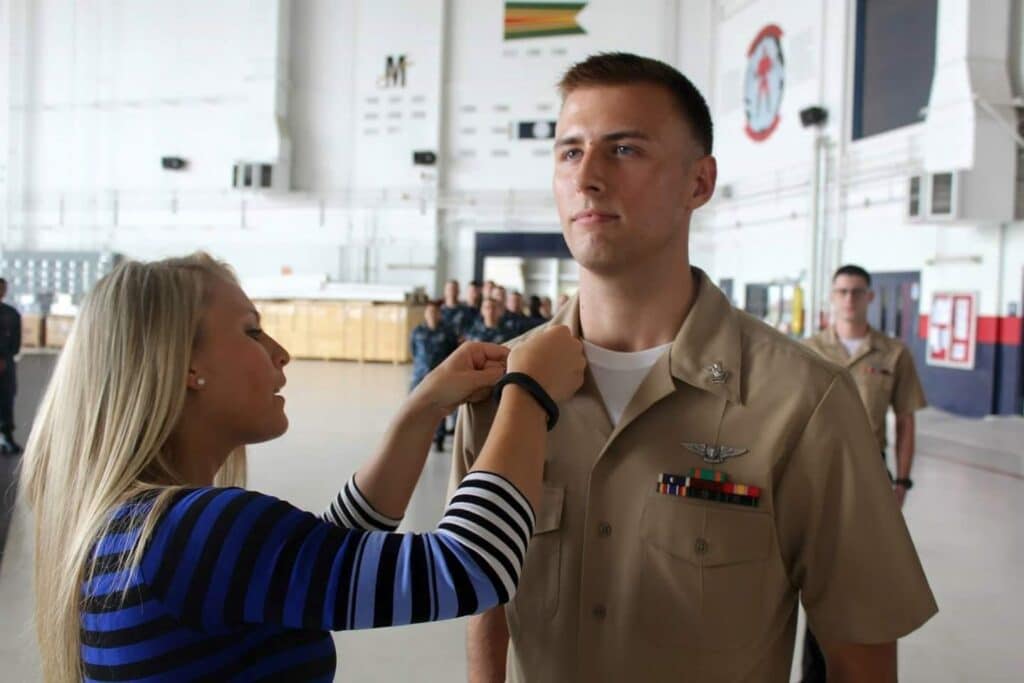
The timing wasn’t the best. Tiegen had enlisted in the Navy and was leaving for boot camp in two months. A girlfriend wasn’t part of his plan.
“I was pretty hard set on not having a girlfriend before I went into the military,” he said.
Keenan had her doubts, too.
“That’s a big commitment, to date for a few months and then say goodbye,” she said.
But she kept his number.
And he kept calling.
Every day.
Betting on Each Other
Their relationship began through long-distance calls, handwritten letters and a willingness to take chances together.
When Tiegen left for Navy boot camp, phone calls were not allowed. Letters took their place.
“We wrote back and forth the entire time,” Keenan said.
She saved them all, eventually turning the letters into a scrapbook.
After boot camp, Tiegen was stationed in California while Keenan finished college in Minnesota.

“Almost our entire relationship before we got married was long distance,” Tiegen said.
At the age of 20, he proposed in 2012. A traditional wedding was planned for the following summer, but military life offered a powerful incentive to make it legal sooner.
“Once you’re married in the military, they give you a pay raise,” Tiegen said. “You get money for housing, money for food. You get to move out of the barracks. That sounded really nice.”
They were engaged. “Why not just get legally married and get the benefits?” Keenan said. “He can get an apartment. He can get it all set up for when we do have our ceremony.”
So they chose the cheapest option they could find: the now-defunct Chapel of Love at the Mall of America.

It was Halloween weekend 2012. Their formal wedding was planned for the following June, and they wanted this to be strictly a legal “paper deal” for the military benefits of being married.
Then the chapel employee asked if they had brought a witness.
“We didn’t know we had to bring a witness,” Keenan said.
“No problem,” the woman told them. “We get this all the time.”
She picked up the phone.
“I need a witness again.”
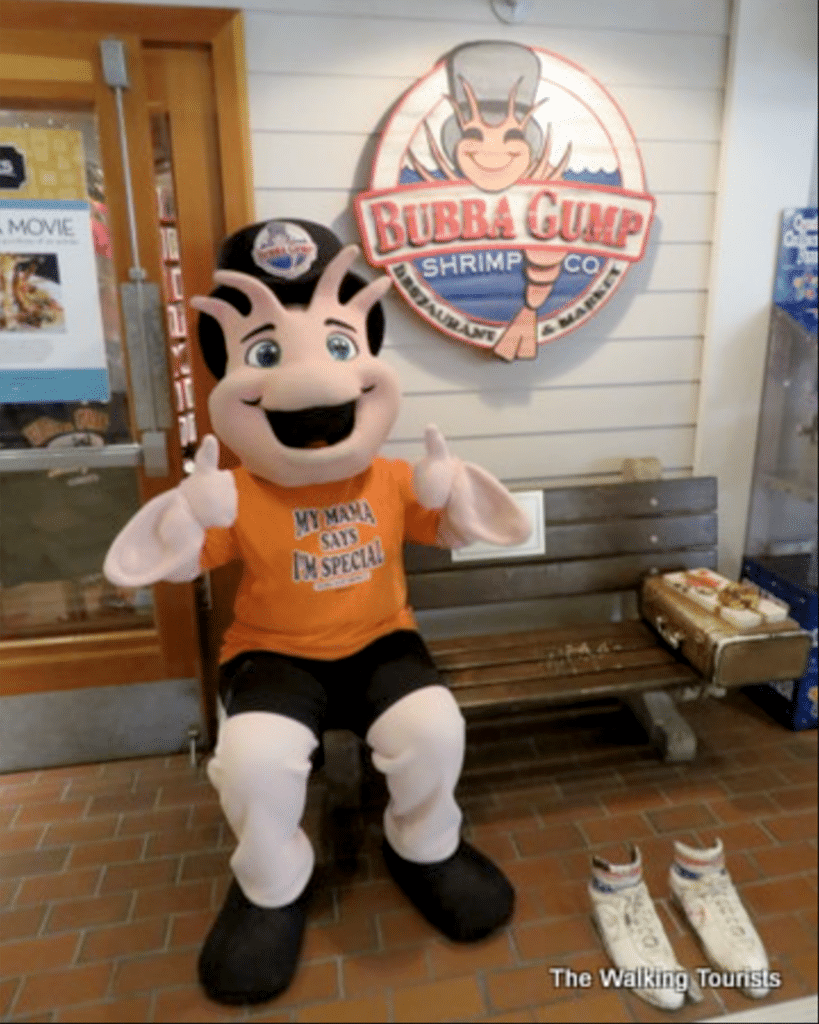
“In comes this person in a big shrimp costume from Bubba Gump Shrimp,” Keenan said.
And with a giant shrimp as their witness, Tiegen and Keenan were legally married.
Tiegen returned to the military, where being married allowed him to move out of the barracks and receive a housing allowance. He found an apartment where he was stationed in Oklahoma, furnished it and began getting their first home ready.
When Keenan graduated the following May, after a relationship spent almost entirely long distance, they finally began their life together.
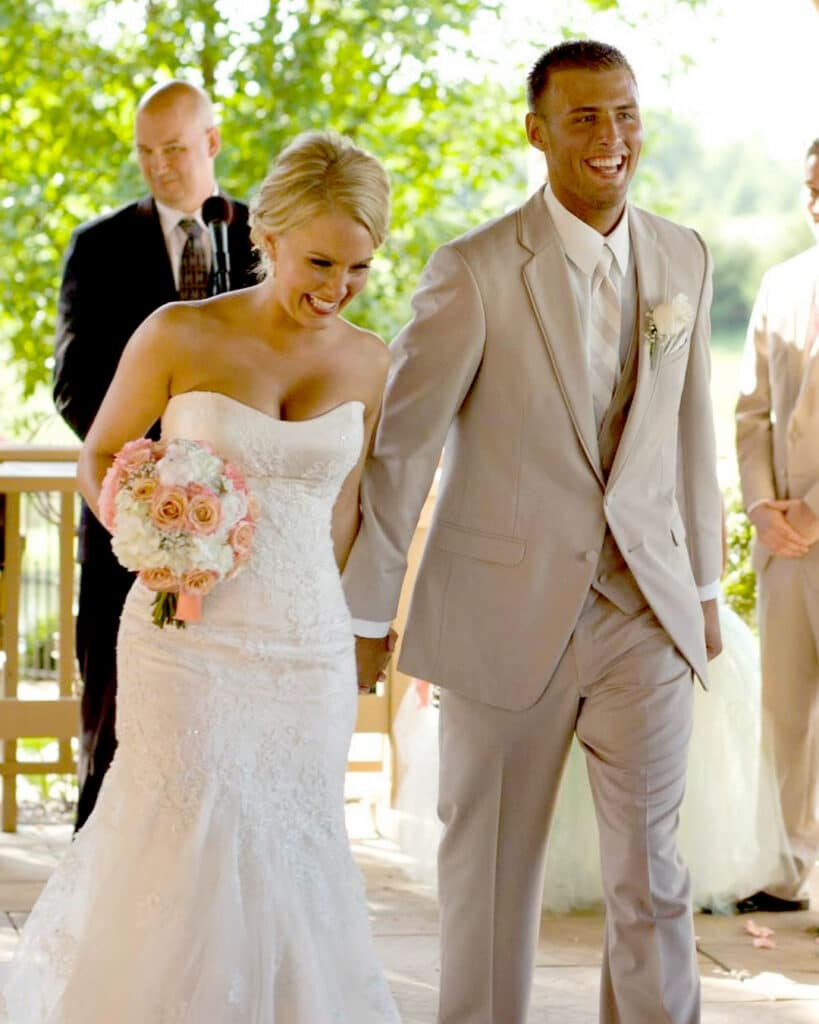
A formal wedding followed in June of 2013.
After leaving the Navy, Tiegen enrolled at the University of Minnesota’s Carlson School of Management, studying marketing and entrepreneurship.
“I came from a family of small-business owners,” he said. “I knew I wanted to be an entrepreneur.”
While in college, Tiegen helped launch a fitness app that raised several hundred thousand dollars in venture capital and was gaining traction until the COVID pandemic hit in 2020.
Learning to Build
With Keenan pregnant with their first child, Tiegen took a corporate job at General Mills.
After a COVID pregnancy, and Tiegen taking a new job, their first child Isla Mae was born in 2021.

An entrepreneur at heart, “I realized pretty quickly I didn’t want to climb the corporate ladder and collect a paycheck,” Tiegen said.
Meanwhile, another kind of education was happening at home.
Renovating their first home taught Tiegen and Keenan how to transform a property and, perhaps more importantly, work together.
The Bricksons renovated their Twin Cities house themselves, learning project after project through what Tiegen calls “YouTube University.”
“If you want to test your marriage, hang a basement full of drywall with your spouse and see if you come out on the other side,” he said.
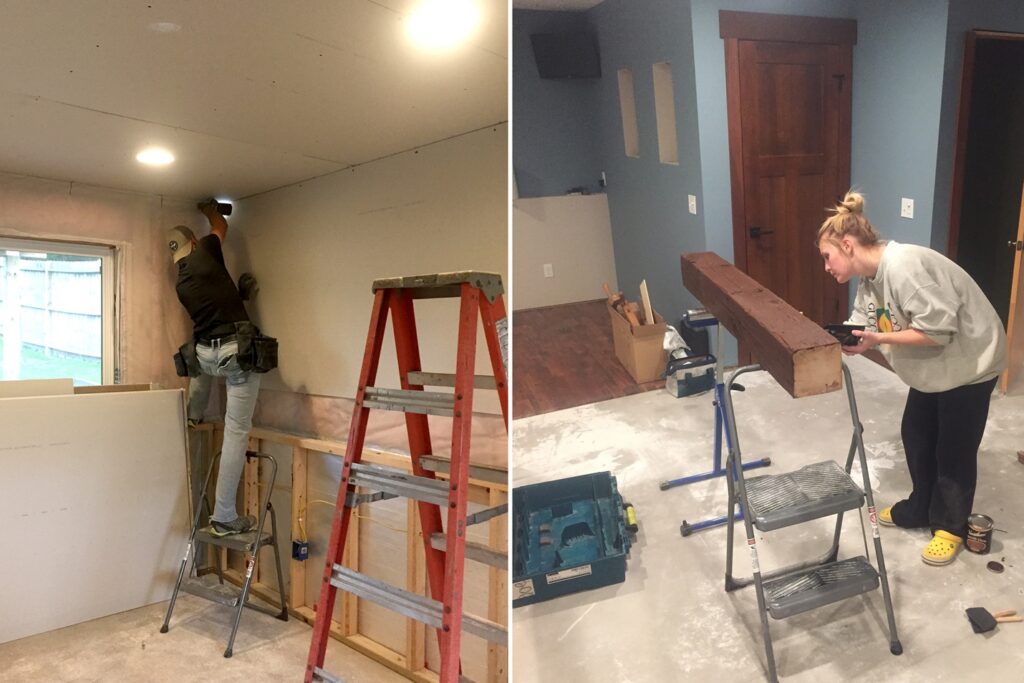
They did, with a growing realization that they were pretty good at doing this… together.
Still in his twenties, Tiegen connected with a few other investors and began finding, fixing and flipping houses.
“We just started finding, fixing, flipping homes together and did a bunch of them,” he said.
The more he learned about real estate, the more possibilities he saw. Apartment buildings. Investment properties. Vacation rentals.
Soon, real estate began looking less like a side project and more like a future.
Short-term rentals caught his attention.
“It was the most hands-on, the most creative, the most fun route,” Tiegen said. “You got to do these really cool designs on properties. You got to build experiences for people.”
That combination of real estate, renovation and creating an experiences felt familiar. It’s what his grandpa Jack did.
Tiegen quit his corporate 9-5 job, sold their home, and turned his attention back home to Duluth.
They Saw What It Could Be
Tiegen learned of a dated Canal Park condo that had been sitting on the market for more than three years.
“Why couldn’t this be an Airbnb?” Tiegen thought. “After all, it’s in Canal Park!”
He soon learned why it had been sitting. The property was classified as a condotel, making conventional financing nearly impossible.
Numerous banks turned him down.
Then longtime family friend Dan Meierhoff connected Tiegen with Mark Lanigan, president of Frandsen Bank & Trust. Lanigan, a longtime Duluth commercial banker, owned two condos in the building. He understood the property.
“I think I can help you out,” Lanigan told him.
He did.
“We couldn’t have done any of this without him,” Keenan said.
The Bricksons closed June 1, 2022.
What they bought was dated. What they saw was character.
“We saw the potential in the brick and the beams and the ceilings,” Keenan said.
The soaring ceilings, massive timbers and brick walls were remnants of the building’s industrial past.
They gutted the condo and went to work.
It was the beginning of The Brix.
Babies and The Brix
Renovations, pregnancies and infants became intertwined with building the business.
When they closed on that first condo, Tiegen and Keenan had just spent five months renovating a house, doing nearly all the work themselves.
Then they packed up one-year-old Isla, moved into the Canal Park condo and started all over again.
“It was 10 months straight of renovating ourselves,” Tiegen said. With Isla barely a year old and Keenan pregnant with their second child, he chuckled, “That was a pretty big year for us.”
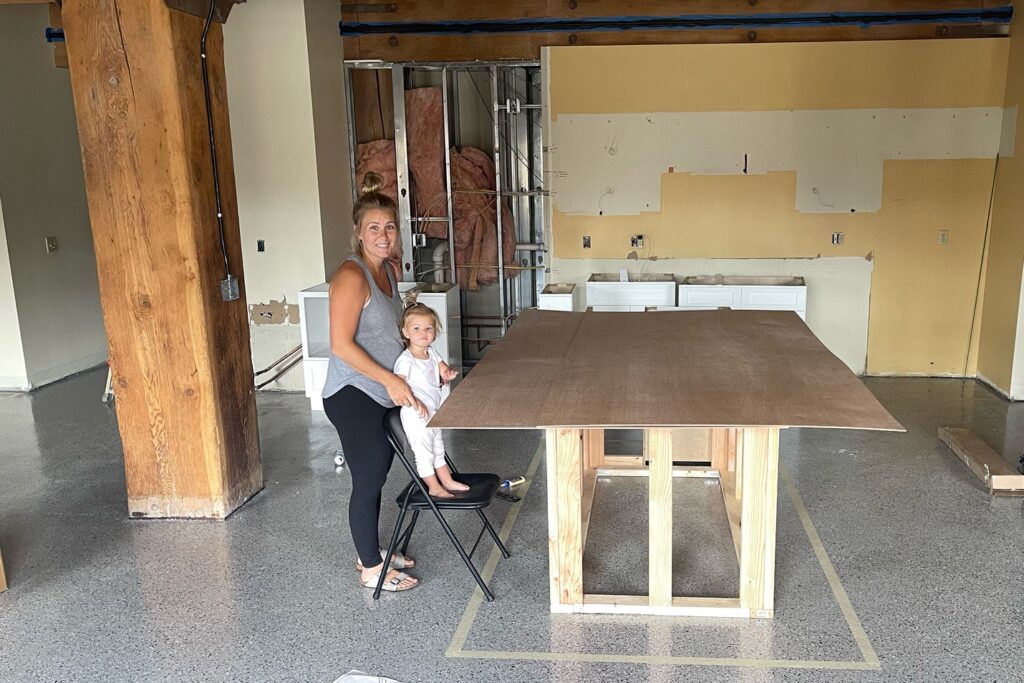
“It was like camping,” Tiegen said.
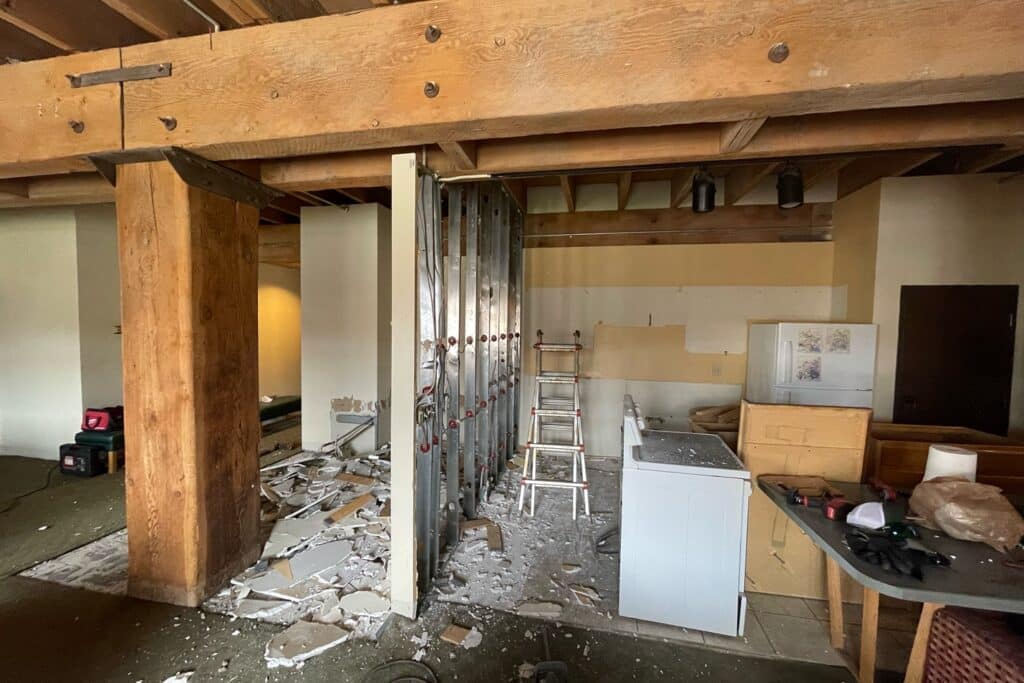
“We had no kitchen for two or three months,” Keenan said. “We had a mini fridge and a little griddle that we cooked everything on and washed our dishes in the tub.”
The Brix Opens
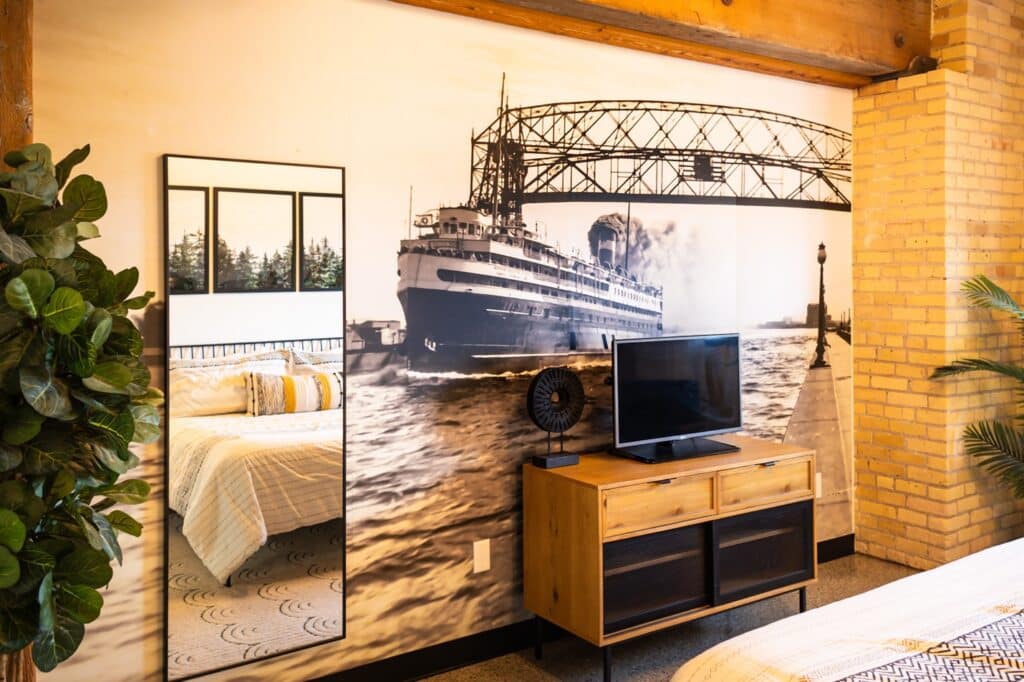
In November 2022, the vacation rental was ready.
They listed The Brix L’Etoile du Nord, French for “Star of the North,” on Airbnb and VRBO.

Someone booked.
“We were super nervous,” Tiegen said. “We were like, ‘Are they going to like it?’”
The guests checked out.
Then came the review:
★★★★★ “Great place to stay in a primary area in Duluth. Would definitely stay here again!”
Then another.
★★★★★ “The best stay we’ve EVER had in Duluth! … It felt like a second home for us and our children.” — Sarah M.
And another.
★★★★★ “We were able to leave our car and walk everywhere.” — Honor M.
And another.
★★★★★ “Enjoyed our family mini-vacation … ability to get together in one spot.” — Michael H.
And another.
Four years later, The Brix–Elevated Stays has more than 1,000 five-star reviews.
More importantly, those reviews tell the story Tiegen and Keenan hoped to create: places where families More importantly, those reviews reflect what Tiegen and Keenan hoped to create.
“People, they’re not coming to stay with us. They’re coming to experience Duluth,” Tiegen said. “We just hope that they come back to us to rest their head at night and to have those experiences with their family.”
For Tiegen, The Brix becomes the home base where families come back together, play games, talk about their day and share their photos.
“People are coming to make memories,” he said. “That’s what vacationing is.”
Finding Their Balance
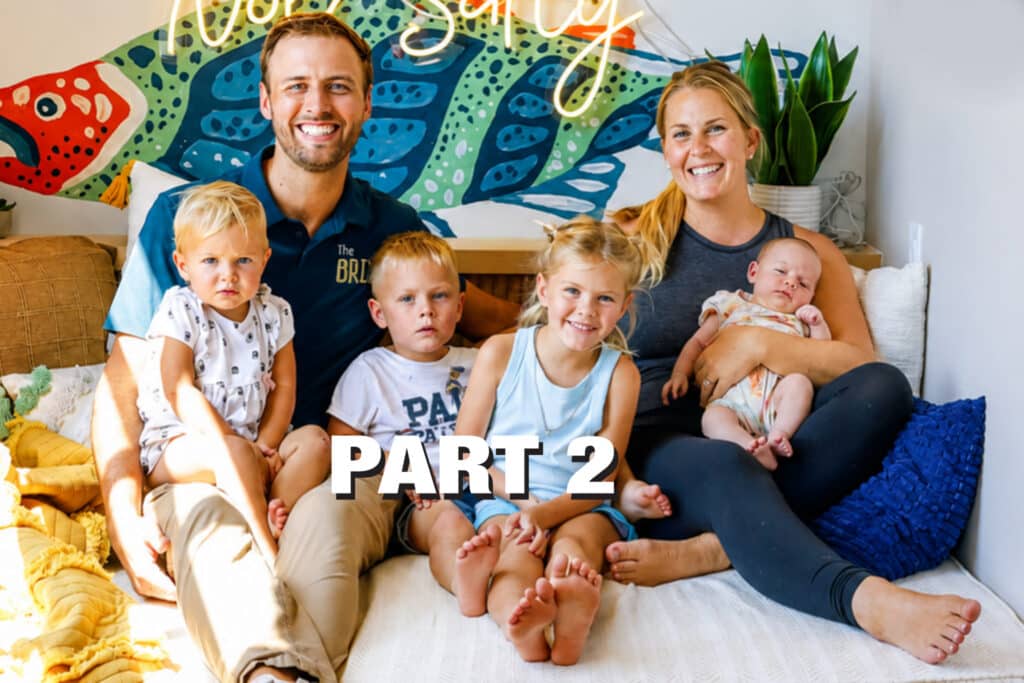
In the last four years, as The Brix–Elevated Stays grew from one to ten, so did the Brickson family, from three to six.
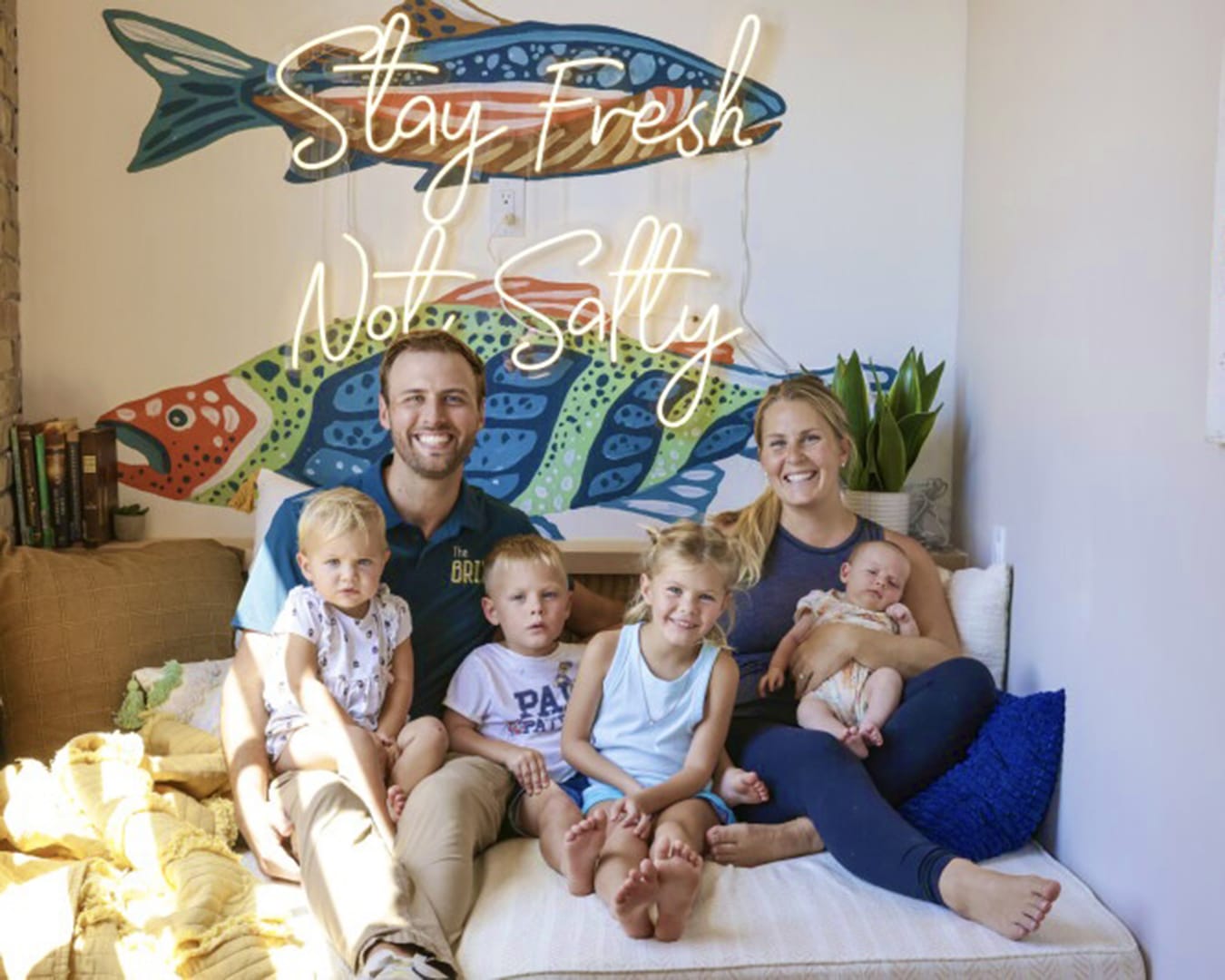
The extraordinary pace of building The Brix while raising four young children has forced Tiegen and Keenan to reconsider what growth means.
“We’ve been out of balance the past year or so,” Tiegen said.
After years of babies, renovations and building the business, the Bricksons were ready to slow the pace. And with the city’s moratorium on new vacation rentals, the Bricksons have that opportunity.
“We just need to focus on our family,” he said. “Soak in the parenting, recover a little.”
Yet inquiries, opportunities and possibilities keep coming.
For now, Duluth’s one-year moratorium on new short-term rental licenses has put some of that growth on hold, giving the Bricksons much needed family time.
Tiegen understands the concerns behind the city’s debate, particularly when vacation rentals replace single-family homes in residential neighborhoods.
“I get that,” he said, describing a home in Woodland becoming a vacation rental with “a rotating door of new people next door.”
But he sees Canal Park differently.
“I think it’s pretty obvious that Canal Park is a tourist district,” Tiegen said. “I’d ask for a little bit of grace on where we’re doing it and why we’re doing it.”
For the Bricksons, the opportunity remains where The Brix began; investing in dated properties inside historic Canal Park buildings and giving them new life.
More Than Brix
Buildings can be renovated. Businesses can grow. But for Tiegen and Keenan, the real measure is found in the families, experiences, memories and connections those places make possible.
Tiegen learned that from his grandfather Jack at the family cabin on the Pike Lake Chain of Lakes in Iron River and Jack’s winter home in Florida.
“All the best memories of my whole life were surrounded around those times together,” Tiegen said.
Today, Tiegen and Keenan hear much the same thing from families staying at The Brix.
“When we get a comment from somebody that says, ‘We had such a great time. We spent my 60th birthday here and I had my kids and my grandkids,’ that’s really cool,” Tiegen said.
There is something fitting about where it is happening.
What Goes Around, Comes Around
More than 130 years ago, entrepreneurs invested along Duluth’s waterfront because they saw opportunity and believed in Duluth’s future. Among them were the entrepreneurs who built Marshall-Wells Hardware.
Today, those brick walls and massive timbers remain. Tiegen and Keenan are part of the next chapter, investing in the buildings and giving old spaces a new purpose.
For Destination Duluth, there is an even bigger picture.
A family comes to Duluth. They stay together. Walk Canal Park. Eat at local restaurants. Explore the city. Make memories.
They come back.
Eventually, Duluth begins to feel a little like home.
That’s how a vacation destination can become a Destination for Life.
Buildings are more than Brix.